
Look at all those screens!
A quick look at some of the Celtics screening actions from last night's win

On a cold and snow-filled day in Boston (from what I saw online), the Boston Celtics found a way to thaw the TD Garden crowd en route to a win over the Portland Trail Blazers. The game had some added juice due to the return of Jrue Holiday — who got a much-deserved tribute video — and Robert “Timelord” Williams.
Despite the controversy that surrounded the Trail Blazers to begin the season with Chauncey Billups, Tiago Splitter has managed to keep their season on track. They play physical, they focus on defense, and they stick to basic Morey-ball concepts (layups, dunks and threes). Although their accuracy across all three levels is mediocre at best.
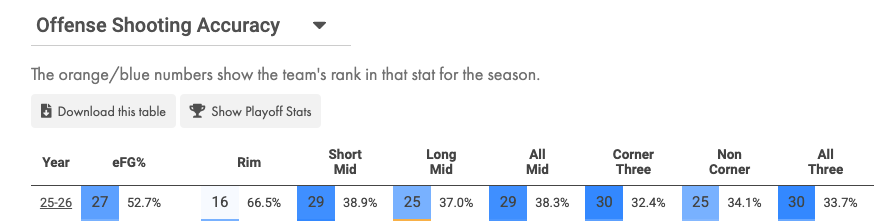
When speaking with the media after the game, Splitter was complimentary of how the Celtics look to create scoring opportunities.
“They’ve filled their roster with guys that put fear at the 3-point line,” Splitter said. “So, it makes our defense get stretched all the time, because you have to be there. They are setting (screens), flare, and pin-downs. You've got to navigate those screens. They have 5’s that set great screens. And you just have to fight, fight all game, and it’s a very physical game for the defenders. We’ve got to because it’s unbelievable the amount of off-screens they set, and you’ve just got to be ready. And, you know, it’s a great offensive team.”
So, for today’s newsletter, I thought it would be fun to look at some (maybe 4 or 5) of the Celtics’ screening actions from last night, and how they helped generate offense — either directly, or as part of a decoy system.
This action is one of those pesky flare screens Splitter was talking about.
Amari Williams sets a screen above the break, allowing White to flare out to the weakside logo. Pritchard spots him in space and fires over a skip pass (because it skips Williams to reach White).
Jrue Holiday closes out to White, and then it becomes a training battle from last season. White drives, hits the up and under and nails the floater.
Why was this flare screen important? Because it created the initial space to get the pass off, and for Williams to cut into the restricted area and remove Rob Williams’ ability to close out - or shrink the floor - on White once he got to the nail.
Here’s another example…
