


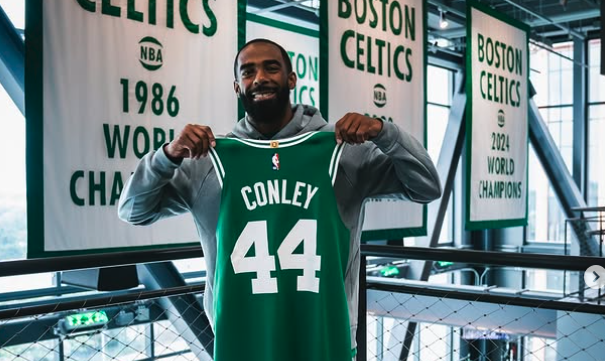
When you look at the Boston Celtics' current roster, their guard rotation is clearly the weakest area. Mike Conley Jr. was a solid off-season addition; however, at his age (38), you can't ask him to eat major minutes every night.
Boston's wing rotation, however, is overloaded with talent. Parting ways with someone like Sam Hauser could not only open up playing time for some of the younger guys on the roster, but it could also help Brad Stevens round out the guard rotation at the same time.
One player I've got my eye on right now is Tre Jones of the Chicago Bulls. Jones, 26, has two years remaining on his current $24 million contract. The final year is a team option, so Boston could cut bait if things don't work out.
|
The deal
Celtics would shed $2 million from their current salary cap
|
Targeting Jones would be about more than money, though. He would give the Celtics a different dimension on offense. Rather than being another perimeter-based talent, Jones does his best work when getting downhill. Last season, he averaged 12.9 drives per game.
On those drives, Jones kicked the rock 49.3% of the time, while also averaging 4.8 shot attempts.
Despite being a small guard – he's 6'1'' – Jones was consistently successful when attacking and finishing around the rim. Furthermore, he also shone as a creator with the ball in his hands, as you can see by the numbers below.
|
Tre Jones Key Offensive Numbers
|
If the Celtics want to continue leaning into a faster-tempo offense, or at least want the option to change gears during a game, Jones could be a valuable addition. He thrives when pushing the tempo in the open floor, especially if he can get downhill early and either force the defense into building out or put some quick points on the board.

Whether Jones would have the ball in those early shot-clock possessions in Boston is certainly questionable. That role usually falls to Jayson Tatum, Derrick White or even Payton Pritchard. However, if you're looking to punch the defense in the mouth, Jones' speed, shiftiness and aggression when attacking downhill could be a strong wrinkle off the bench.
The fact that Jones is usually looking to pass out of his drives also fits the way Mazzulla likes his team to play. Inside-out basketball fits Jones' skill set, and in Boston, he would be surrounded by elite shooters and secondary drivers to keep the defense in a near-constant rotation.

Due to Jones' success rate when attacking the rim, teams will often try to take away his drive when working in the half-court. As such, assists like the one in the clip above have become commonplace for Jones. The fact that he can draw multiple defenders when coming off a PnR can open up shooters, cutters or even the roll man – all of which fits with what Mazzulla asks of his guards.
When I look at the current Celtics roster, on-ball creation is among my biggest concerns. Sure, Jayson Tatum, Derrick White and Payton Pritchard can all generate scoring chances for themselves and their teammates. I'm also expecting Hugo Gonzalez and Baylor Scheierman to get a push as playmaking forwards at points this season, too.
Still, having another reliable creator makes sense to me, especially one who plays downhill and loves to draw a crowd.

The beauty of having multiple playmakers is that they don't always need to be the focal point of the offense. They can create on secondary actions, late in the clock, or when attacking a loose ball. Can you imagine having someone like Jones cutting from the weak side with Tatum finding them with a pass, only for the defense to rotate and get cooked by the ball being swung again?
One last point I want to make is that Jones has also been incredibly reliable in terms of taking care of the ball. According to Cleaning The Glass, Jones has been in, or above, the 80th percentile for TOV% in five of his seven NBA seasons so far. Last season, he turned the rock over 92 times, despite ranking third on the Bulls for touches per game.
It's worth noting that I still think Mike Conley can fit into the Celtics equation this season. I'm not championing for Boston to replace him before a ball has even been bounced. My only concern with Conley is how many quality minutes he's going to provide per game, and whether his veteran leadership is where his value actually lies at this point in his career.
Adding someone like Jones would enable Mazzulla to lean on Conley for shorter spurts, therefore giving Boston a better chance to get the best out of the 20-year veteran.
Of course, as with any undersized guard, there will be defensive concerns. At 6'1'' Jones would undoubtedly be a target for half-court offenses, especially in the postseason.
Interestingly, though, the analytics say that Jones tends to hold his own when guarding on the perimeter.
|
Jones Defensive Numbers - Per Basketball Index
|
The one area Jones does struggle is when being tasked with chasing his man, either coming off a screen, hand-off or having been beaten off the bounce. Fortunately, the Celtics run a solid switching system, which would reduce the impact of Jones' struggles as a chaser and allow him to hone in on his strengths, most notably guarding in isolation and being a disruptive force in the passing lanes.

Jones is a capable defender when kept on guards. His lack of size rapidly becomes an issue if he's tasked with guarding up. Teams would undoubtedly look for those mismatches during postseason outings, especially as Boston got deeper into a series of the playoffs in general.
Factor in Pritchard – and now Conley (who is also 6'1'), too – and the similar defensive issues that come with their presence, and you have a genuine concern about leaning on three smaller guards within the same rotation.
Still, there are some clear benefits to pursuing Jones to round out Boston's guard rotation. He's still relatively young, he plugs a need, and he improves the overall playmaking on the roster.
I'd feel much more comfortable if the guard rotation looked something like this next season:
|
Guards
|
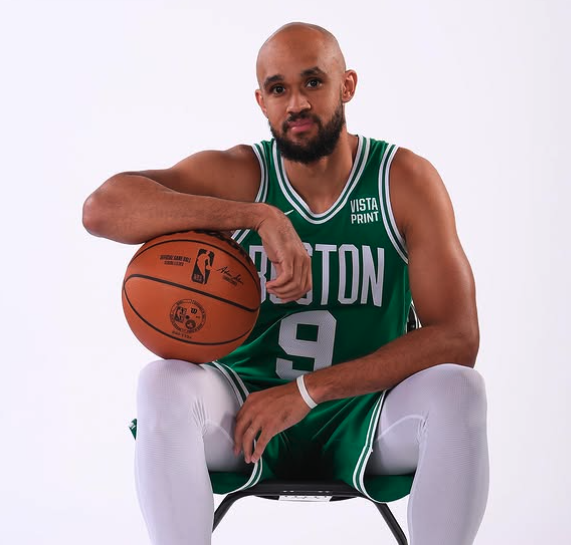
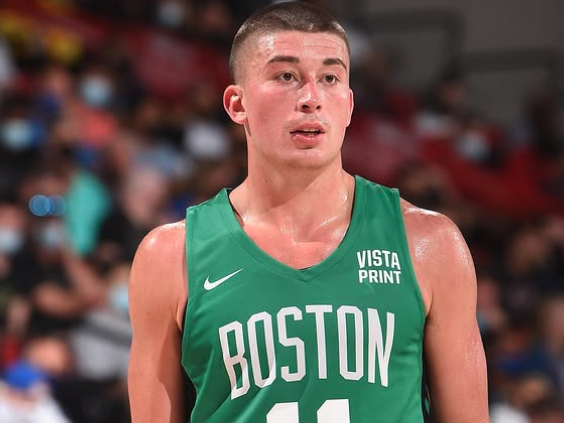
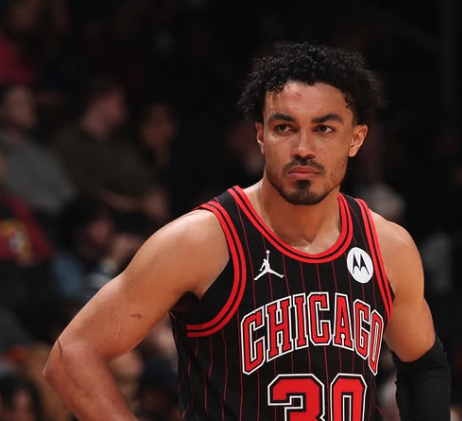
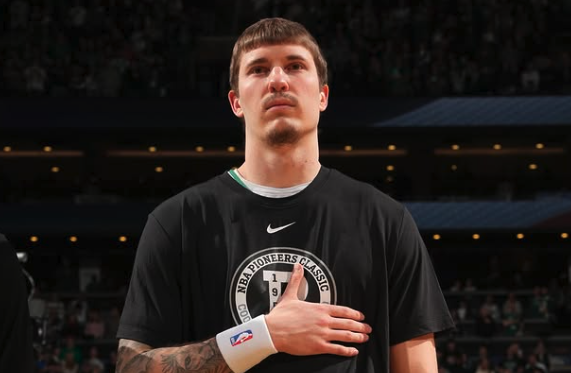
Billy Donovan was a clear fan of what Jones brought to the table in Chicago. If you had asked me if I envisioned Jones being a potential trade candidate for the Bulls before Donovan left his role as head coach, I probably would have said no.
Now, however, with Tiago Splitter manning the sidelines and a rebuilding underway, Jones could become a genuine candidate to be moved on.
The beauty of the offseason is that everything is speculative. Right now, we don't know what gaps are going to appear within the Celtics roster. We don't know what the strengths and weaknesses are going to be (in terms of how the roster fits the system), and we don't know what version of Conley – or Paul George for that matter – we're going to get.
However, if playmaking does prove to be an issue, Boston could do a lot worse than taking a closer look at what he brings to the table.
If you found this post via Google, Social Media, or an AI Search, then join the mailing list today so you get future articles and podcasts sent STRAIGHT to your inbox!

The room
Comments are open to The Green Room members. Sign in, or create a free account and join in.